
PVC cable materials are engineered formulations designed to meet demanding technical, safety and durability requirements. Through the careful selection of additives, PVC compounds can provide electrical insulation, mechanical protection, fire safety performance and long service life across a wide range of cable applications.
The European PVC cable value chain continuously develops cable formulations to improve performance, safety and environmental compatibility, while ensuring compliance with European regulations.
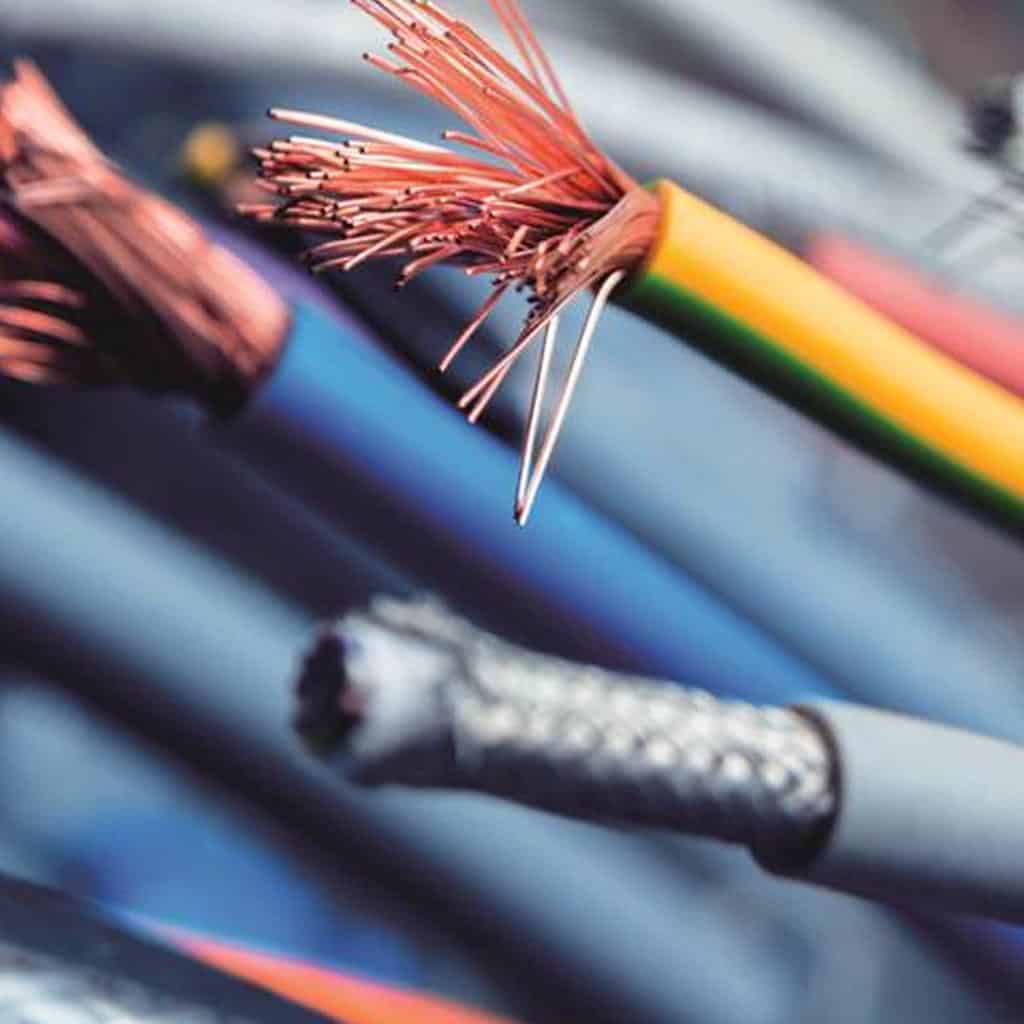
Tailored Material Performance
PVC cable compounds consist of PVC polymer combined with selected additives that enable specific performance characteristics required in cable applications.
These formulations allow manufacturers to adjust properties such as:
- electrical insulation performance
- flexibility and mechanical strength
- resistance to temperature and environmental exposure
- fire and smoke behaviour
- durability over long service life
Responsible Use of Plasticisers
Plasticisers are used in flexible PVC cable compounds to provide the flexibility required for installation, handling and long-term performance.
Over the past two decades, the European PVC industry has undergone a major shift in plasticiser technology, driven by regulation, innovation and voluntary industry action. Low molecular weight orthophthalates such as DEHP, DBP, BBP and DIBP have been substituted in Europe.
Modern flexible PVC cable formulations commonly use high molecular weight phthalates, such as DINP and DIDP, as well as non-phthalate plasticisers including terephthalates, trimellitates and other specialised alternatives. The choice depends on the technical requirements of the cable, including flexibility, temperature resistance and durability.
Research and development also continues into bio-based plasticisers and other innovative solutions, expanding the range of formulation options available to cable manufacturers.
Other Additives in PVC Cable Formulations
In addition to plasticisers, PVC cable compounds include other additives that contribute to performance and durability.
These may include:
- stabilisers to ensure long-term material stability
- additives supporting fire performance
- fillers to optimise mechanical and processing properties
- lubricants and processing aids
The selection of these additives depends on the specific cable application and required performance characteristics.
Innovation in Additive Technologies
The European PVC cable value chain continues to develop additive systems that combine technical performance with improved sustainability and circularity.
This includes:
- development of bio-based plasticisers and alternative additive solutions
- optimisation of formulations to support recycling and circular use of PVC
- technologies enabling the identification and management of legacy additives in recycled materials
These developments are supported through collaboration within the VinylPlus framework.
Assessing Additive Sustainability
VinylPlus has developed the Additive Sustainability Footprint® (ASF) methodology to support the sustainable use of additives in PVC products. Rather than assessing additives only as isolated substances, ASF considers their function and performance in the finished product across its life cycle.
The methodology takes into account factors including responsible sourcing, product performance and durability, recyclability, end-of-life options and opportunities for substitution or reformulation. It is designed as a continuous improvement tool, helping companies identify sustainability strengths, knowledge gaps and areas for further development.
Regulatory Compliance
PVC cable compounds placed on the European market must comply with applicable European chemicals legislation, including REACH and, where relevant, requirements such as the RoHS Directive.
These regulatory frameworks establish requirements for the registration, restriction and safe use of substances in cable formulations. Through VinylPlus, the European PVC value chain also supports the substitution of substances of concern where appropriate, the development of improved additive systems and the responsible management of legacy additives that may be present in recycled PVC.
This regulatory framework is complemented by the industry’s continuous improvement approach to additive sustainability, material performance and circularity.