
VinylPlus Cables supports evidence-based decision-making for cable systems across Europe. When assessed using recognised life cycle methodologies, PVC cables show a competitive environmental footprint compared with alternative materials used in electrical and communication applications.
This performance is linked to efficient material use, long service life, reliable performance in demanding environments, and the possibility to incorporate recycled and circular PVC. Together, these factors contribute to optimised environmental performance across the full life cycle of cable systems.
What Environmental Footprint Means
Environmental footprint refers to the impacts of a product across its entire life cycle, from raw material production to end-of-life management.
For cable systems this typically includes:
- Raw material extraction and production
- Compounding and cable manufacturing
- Transport and installation
- Use phase during service life
- End-of-life treatment such as recycling or energy recovery
Life Cycle Assessment (LCA) is the internationally recognised methodology used to evaluate these impacts.
To ensure fair comparisons, LCAs must apply consistent functional units, system boundaries and technical performance requirements.
Evidence from European Assessments
Recent assessments at EU level, including work by the European Chemicals Agency (ECHA), highlight that there is no sufficient evidence to justify a general substitution of PVC in cable applications based on environmental or health considerations.
At the same time, dedicated European life cycle studies on cables show that:
- Environmental performance depends on the specific indicator
- Differences between materials are often limited
- No single material is consistently superior across all impact categories
This confirms that material choices in cables must be based on performance requirements and full life cycle assessment, not simplified assumptions.
Life Cycle Drivers of PVC Cable Performance

Material Efficiency

Long Service Life

High Reliability

Efficient Processing
Where Impacts Occur
Life cycle assessments show that the environmental footprint of cables is primarily driven by:
- Raw material production
- Manufacturing processes
The use phase is typically similar across cable types and does not significantly influence comparative results.
This means that continued improvements in:
- PVC resin production
- Additive systems and compounding
- Energy efficiency
are key to further reducing environmental impacts.
Eco-profiles and Environmental Product Declarations for PVC
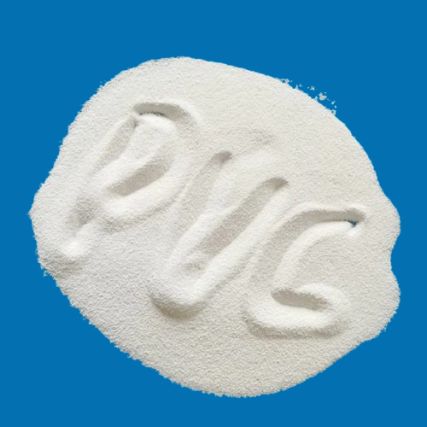
Environmental Product Declarations (EPDs) for PVC resin are based on Life Cycle Inventory (LCI) data from the Plastics Europe Eco-profile programme. These datasets represent the average European industrial production of vinyl chloride monomer (VCM) and polyvinyl chloride (PVC) from cradle to gate.
The Eco-profile and EPD datasets for VCM and PVC were fully updated in 2022 and revised in 2026, providing an up-to-date basis for Life Cycle Assessment (LCA), Environmental Product Declarations and environmental footprint calculations used in infrastructure projects.
These datasets support transparent, standardised reporting and are widely used by manufacturers, consultants and EPD programme operators when documenting the environmental performance of PVC-based products.
Continuous Improvements in Chlorine Production
A significant share of PVC’s environmental profile is linked to chlorine production. Over the past decade, the environmental performance of chlorine production in Europe has improved substantially.
Two key developments have contributed to this progress:
- The transition across Europe to membrane electrolysis technology, replacing older production methods
- Changes in national energy mixes, including a growing share of lower-carbon electricity
According to the latest European chlorine eco-profile, the Global Warming Potential of chlorine production decreased by around 22% between 2011 and 2020.
Because PVC consists of approximately 57% chlorine derived from common salt, improvements in chlorine production directly reduce the environmental footprint of PVC materials.
Lower Reliance on Fossil Feedstock
Another structural feature of PVC is its lower dependence on fossil feedstock compared with many other common plastics.
More than half of the mass of PVC originates from salt (sodium chloride), while the remaining fraction is derived from hydrocarbons. As a result:
- PVC requires significantly less fossil feedstock energy than polymers primarily derived from oil or gas such as polyethylene (LDPE, HDPE) and polypropylene (PP).
- When both process energy and feedstock energy are considered, suspension PVC typically requires around 60 MJ/kg, which is lower than the corresponding values for several other major plastics.
In addition, the use of bio-attributed and bio-circular feedstocks in PVC production can further reduce reliance on fossil carbon while maintaining identical material performance and recyclability. These solutions are fully compatible with existing PVC formulations and infrastructure.
This combination of salt-based chemistry, renewable or circular carbon sources, and ongoing industrial improvements contributes to the overall environmental profile of PVC materials used in long-life applications such as cable systems.
Continuous Improvement Across the Value Chain
The European PVC industry continues to improve the environmental performance of production processes through energy efficiency, technological upgrades and circular material use.
Within the VinylPlus framework, these improvements are supported by transparent data reporting and regular updates of industry datasets used in LCA and EPD systems.
Together, these efforts help ensure that environmental assessments of PVC products reflect current industrial practice and ongoing progress across the value chain.